

Rent in Montréal and Québec City is up 8–12 % year-over-year, Quebec has the highest combined tax rates in Canada, and QPP contributions are higher than CPP. Yet hundreds of my clients still manage to buy their first home faster, retire comfortably, and sleep well at night.
Here are the exact seven habits that make the difference – all adjusted for Quebec taxes, grants, and rules.
Quick map: which account fits which goal
| Goal | Best first account | Why it fits | Notes for Quebec residents |
| First home in 1-5 years | FHSA then RRSP HBP | FHSA gives deductible contributions and tax-free withdrawals for first home. HBP lets you borrow from RRSP with repayment schedule | Combine FHSA + RRSP Home Buyers’ Plan for larger down paymentFHSA: $8,000/yr, $40,000 lifetime |
| Retirement 10+ years | RRSP for tax deferral, TFSA for flexibility | RRSP lowers taxable income now, TFSA grows tax-free with no tax on withdrawalRRSP deduction is worth more thanks to 16.5 % Abattement du Québec | Coordinate with marginal tax rate. Watch QPP projectionsRRSP room = 18 % of income, max $33,540 (2025) |
| Short-term buffer 3-12 months(Emergency fund) | High interest savings in TFSA if room | Liquidity (instant access) plus tax-free interest if inside TFSA | Keep this distinct from investingTFSA: $7,000 new room in 2025 |
| Child education | RESP | Grants boost savings, tax-efficient withdrawals to studentsCESG 20 % + Quebec QESI 10 % | Consider family plan if more than one childQESI: up to $3,600 lifetime per child |
| Disability support | RDSP | Government bonds and grants can be significant (up to $10,500/yr for low income) | Requires Disability Tax Credit eligibility Lifetime max $200,000 contributions |
| Non-registered investing | Tax-efficient funds and asset location | Use when registered rooms are full | Coordinate capital gains and Quebec surtaxes |
Habit 1. Pay yourself first and automate cash flow
What to do
- Set a fixed transfer the day your income arrives (your pay). Start at 10 percent, move toward 15-20 percent as debts shrink, and transfer automatically.
- Split deposits into buckets: emergency fund, registered accounts, and fixed bills.
- Use a simple target like 50-30-20 adjusted for your taxes and housing costs. In high-rent areas, a temporary 60-20-20 can keep you on track without stress.
Why it works
Automation removes willpower from the system. You protect savings before spending. Over a full year, even a modest 300 CAD per month into TFSA compounds and keeps flexibility for unexpected events.
My practice: I set up Manulife Bank All-In packages for clients (0 fees + up to 4.6 % on savings) and link automatic transfers on pay day.
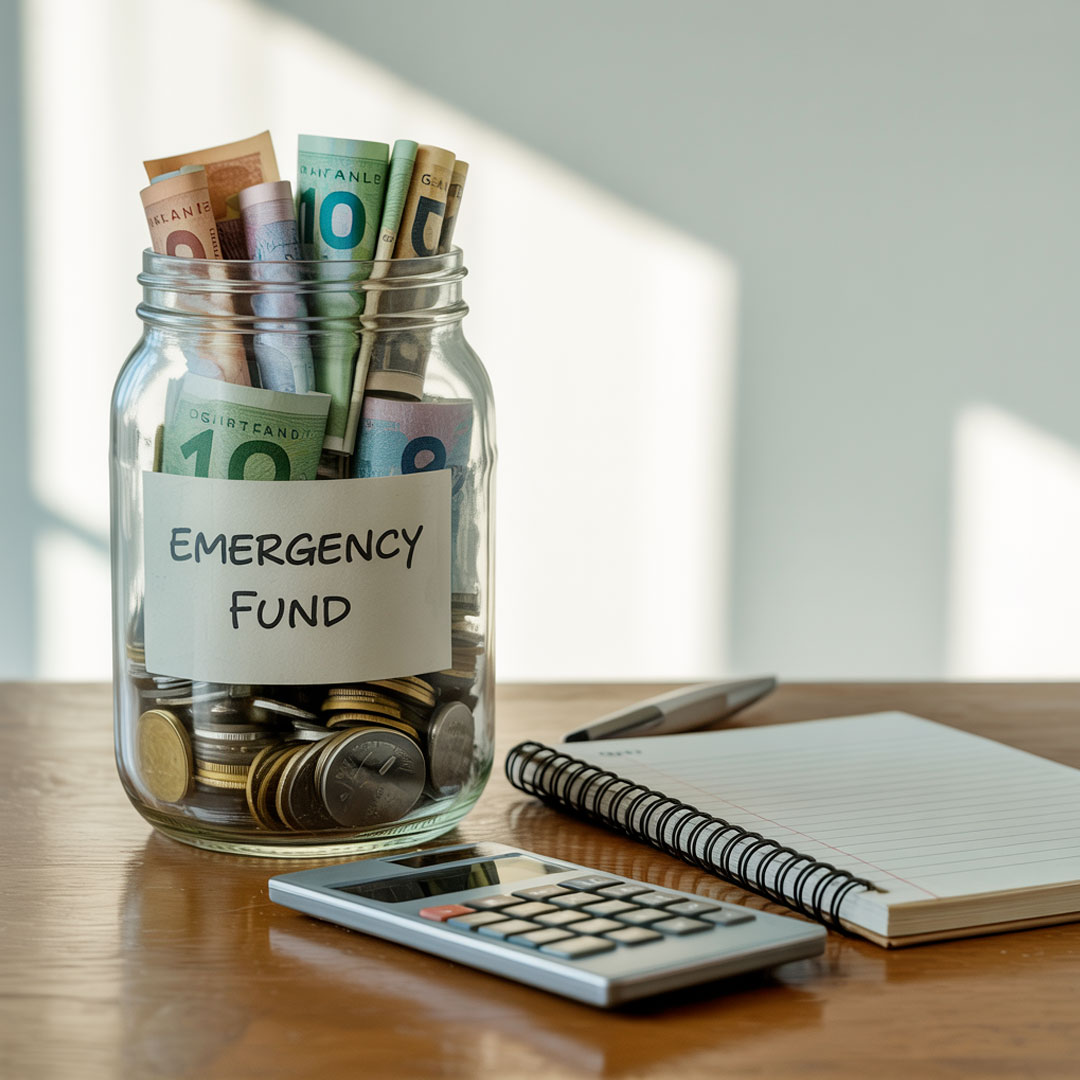
Habit 2. Build a real emergency fund before you chase returns
What to do
- Target 3-6 months of essential expenses if you have stable employment, 6-12 months if self-employed.
- Keep it in a high interest savings account. If you have TFSA room, consider putting the buffer inside TFSA for tax-free interest and quick access.
Why it works
Market dips and job surprises happen at the wrong time. Cash is an insurance policy for your plan. It also prevents expensive credit card use at 20 percent plus.
My practice: I run a precise cash-flow model to calculate the exact dollar amount you need (not a random guess).
Habit 3. Use the right account for the right tax outcome
What to do
- RRSP: contribute when your marginal tax rate is high, then withdraw in lower-income years. Consider RRSP loans only if the deduction meaningfully improves cash flow and you can repay fast.
- TFSA: use for mid-term goals, emergency cash, and high-growth investments you may need to access without tax friction.
- FHSA: if you qualify as a first-time home buyer, open it early. Contributions are deductible like RRSP, withdrawals for a qualifying home are tax-free like TFSA.
- RESP: capture the government grant for your children’s education.
- RDSP: if eligible, grants and bonds can be large relative to contributions.
Why it works
Tax alignment is the quiet engine of net worth. In Quebec, provincial and federal layers compound the benefit of correct sequencing.
Quebec nuance: the federal tax abatement (16.5 %) makes RRSP deductions more valuable here than in any other province when your marginal rate is 37 %+.
2025 sweet spot:
– Income > ~$110k → prioritize RRSP
– Income < ~$55k or need flexibility → prioritize TFSA
– First-time buyer → open FHSA today (even $100/month compounds)
My practice: I open and manage all five registered accounts (FHSA, RRSP, TFSA, RESP, RDSP) in one place so you never miss contribution room or grants.

Habit 4. Insure the plan, not just the person
What to do
- Life insurance sized to debts, income replacement, and children’s education needs.
- Disability and critical illness insurance if your household relies on one or two incomes.
- Group benefits review if you already have workplace coverage.
- Travel insurance if you leave Quebec often, and a check on out-of-province gaps.
Why it works
One hospitalization can erase years of careful saving. Protection is the shock absorber for your long-term plan.
Must-have layers for most families:
– Term life to cover mortgage + 10× income
– Own-occupation disability (not group “any occupation”)
– Critical illness (pays lump sum on diagnosis)
My practice: I do independent, side-by-side quotes from 15+ carriers and usually save clients 25–40 % vs bank offerings.
Habit 5. Make debt work for you, not against you
What to do
- Prioritize high-interest balances first. If needed, use a low-rate consolidation loan to retire credit card debt. (19–29 % interest is toxic).
- For homeowners, compare accelerated mortgage payments versus investing. In some cases, moving variable-rate risk to a fixed term stabilizes cash flow.
- Compare Smith Manoeuvre or HELOC cash-flow strategies (interest can become tax-deductible legally) , and only after a full plan review.
- Self-employed: structure to reduce QPP premiums and create deductible interest.
Why it works
Every dollar of interest avoided is a risk-free return. Well-structured debt improves flexibility and keeps you investable.
My practice: I connect you with mortgage brokers who still offer best fixed rates possible and model the “pay mortgage vs invest” math.
Habit 6. Track your numbers monthly and adjust twice a year
What to do
- One page, once a month: income, fixed bills, card balances, savings transfers, account values.
- Twice a year do a tune-up – in January and July: rebalance investments, review insurance, and check contribution room left in RRSP, TFSA, and RESP.
Why it works
Small course corrections beat annual surprises. Your plan stays aligned with wage changes, interest rates, and family events.
My practice: Clients get my Google Sheet template + scheduled portfolio rebalance and insurance check.
Habit 7. File clean taxes and capture every credit
What to do
- File on time with both CRA and Revenue Quebec. Avoid late-filing penalties that compound.
- Track receipts for medical, childcare, tuition, and charitable donations not to miss credits. Other common missed credits:
– Solidarity tax credit (up to $1,500+ per family)
– QESI for RESP (10 % Quebec grant)
– Home accessibility tax credit (if 65+ or disabled)
- Coordinate RRSP timing, capital gains harvesting, and TFSA room. If you are self-employed, set aside tax money every month.
Why it works
Net income, not gross, funds your future. Clean documentation plus smart timing means fewer surprises and more usable cash.
My practice: I collaborate with your accountant or prepare everything myself for individuals and self-employed professionals.

5 Costly Mistakes Quebec Residents Make in 2025
1. Opening FHSA but never using the RRSP Home Buyers’ Plan → leave $60,000 on the table.
2. Maxing TFSA first when marginal rate is 48–53 % → lose thousands in refunds.
3. Forgetting to apply for QESI (Quebec 10 % RESP grant).
4. Carrying 19 % credit-card debt while having home equity.
5. Buying insurance through the bank instead of independent market.
Action checklist
- Open FHSA if you haven’t bought a home in the last 4 years, set a starter transfer this month.
- Build your 3-6 month cash buffer, ideally within TFSA if you have room.
- Schedule a 60-minute planning call with me to size RRSP vs TFSA contributions.
- Request an insurance needs analysis.
- Map a debt pay-down path that retires the highest rate first.
- Set a monthly money date on your calendar.
- Book a pre-tax season review to catch credits and avoid missed room.
FAQs
Can I use both FHSA and the RRSP Home Buyers’ Plan to buy my first home?
Yes. You can combine both programs for a larger down payment. Up to $40,000 tax-free (FHSA) + $60,000 (HBP starting 2025) = $100,000+ down payment possible. FHSA withdrawals for a qualifying home are tax-free and do not require repayment. RRSP withdrawals through the Home Buyers’ Plan (HBP) must be repaid within 15 years, but together they give you flexibility and extra funds to enter the housing market sooner.
Should I invest my emergency fund?
No. Liquidity and capital protection come first. The emergency fund’s purpose is security, not growth. Keep it in a high-interest savings account or a low-risk money market fund where it’s accessible anytime. Investments should only involve money you won’t need for several years.
Which is better to prioritize — RRSP or TFSA?
It depends on your income and goals. If your current tax rate is high, RRSP contributions give immediate deductions and potential refunds. If your income is lower or you expect to withdraw funds in the medium term, TFSA offers more flexibility and tax-free growth. Most Quebec households benefit from using both strategically over time. Rough rule: current marginal rate > expected retirement rate → RRSP wins bigger in Quebec because of the abatement.
Do I still need insurance if I already have savings?
Yes. Insurance protects against risks that savings alone might not cover, such as disability, critical illness, or untimely death. Even strong savings can disappear quickly under medical or income-loss pressure. Proper coverage keeps your financial plan intact while you continue building wealth.
What happens to my FHSA if I buy a home outside Quebec?
Still qualifies as long as it’s your principal residence in Canada.
I’m self-employed – any way to lower QPP contributions?
Yes, through salary-dividend mix or a holding company (needs proper planning).
Ready to Make These Habits Stick?
In one 60-minute call I’ll show you:
– Exactly how much to put where in 2025–2026
– Which Quebec grants you’re currently missing
– A personalized debt + insurance + investment roadmap
The first consultation is free and available in English, French, Russian, and Hebrew.
Important note: This article provides general educational information only. It is not personalized financial advice. Investment values may fluctuate, and tax or account rules can change. Always consult a licensed financial planner or tax professional before making financial decisions.