

Introduction:
Borrowing to invest can accelerate wealth but also magnify risk and tax errors. Investment loans in Canada are powerful tools when used with a clear plan, appropriate time horizon, and proper tax guidance.
Many people in Quebec and across Canada now view leveraging as an alternative to only RRSP or TFSA savings. However, investment loans are not for everyone, and interest deductibility rules are strict.
This guide explains who investment loans benefit, how they work, and the key Canadian tax rules to understand before proceeding.
Understanding Investment Loans in Canada
Canada’s well-regulated financial system and broad access to credit make investment loans widely available through banks, credit unions, and independent planners. Recent industry data and advisor experience suggest that more Canadians are exploring margin and term investment loans as they seek higher long-term returns.
An investment loan means borrowing specifically to buy income-generating investments like dividends, interest, or rental income. The expectation is that, over time, the after-tax return on investments will exceed the after-tax borrowing cost.
Used properly, this can boost net worth and complement retirement planning. Used poorly, it can result in debt and losses that take years to recover.
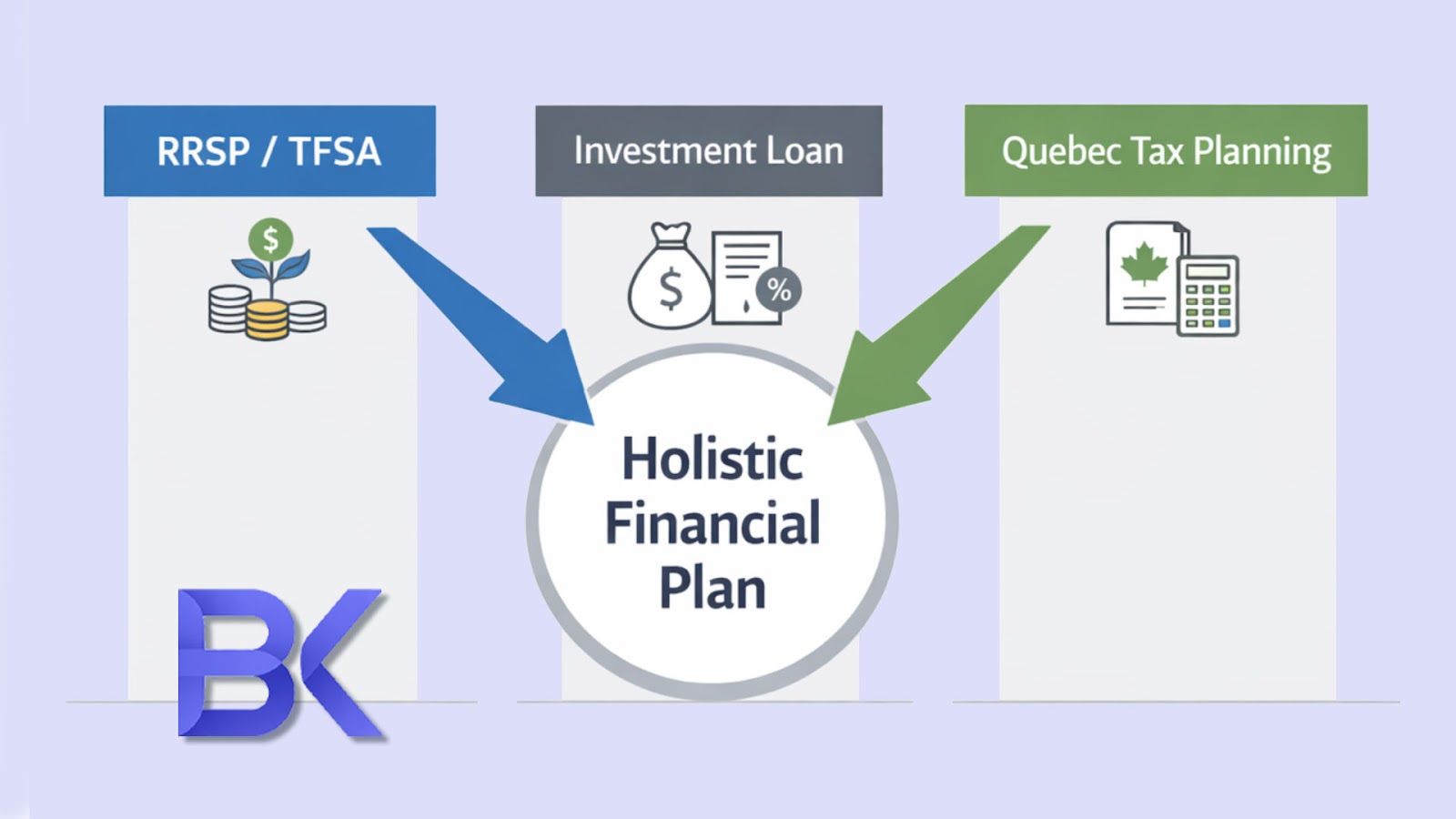
Leveraged Investing in Canada: How It Works
Leveraged investing involves using borrowed funds to build an investment portfolio. You might:
- Take a term loan and invest the lump sum in a diversified portfolio.
- Use a margin account to borrow against existing investments.
- Re-advance a home equity line of credit (HELOC) for reinvestment.
In all cases, you manage two components: portfolio performance and loan repayment. Leverage can help if markets rise steadily and you remain invested long enough. If markets fall early, or you sell in a panic, the loan remains while asset values may not.
Comparing Term Loans, Margin Accounts, and HELOCs
A term investment loan has fixed or variable interest and a payment schedule. A margin account allows borrowing against your portfolio up to a percentage, with potential margin calls if markets drop. A HELOC uses home equity as collateral, typically offering flexible interest-only payments.
The "best" choice depends on income stability, risk tolerance, investment horizon, and cash flow discipline. A detailed budget analysis is essential before choosing any of these structures.
Investment Loan Comparison Table
| Investment Loan Type | Main Advantage | Main Risk / Drawback |
| Term Investment Loan | Predictable payments, fixed schedule | Less flexibility if cash flow changes |
| Margin Account | Easy access, tied directly to portfolio | Margin calls in market downturns |
| HELOC (re-advanceable) | Usually lower rate, flexible payments | Tied to your home, temptation to overspend |
Tax-Deductible Investment Loan Interest in Canada (and Quebec)
A major attraction of investment loans in Canada is the potential for tax-deductible interest costs.
The Canada Revenue Agency (CRA) allows an interest deduction when borrowing to earn income from a business or property, such as dividends, interest, or rent, subject to detailed rules and court decisions. For a deeper technical explanation, see the CRA Income Tax Folio S3-F6-C1.
This rule, while seemingly simple, is highly technical and extensively documented in CRA bulletins and court cases. Mixing personal and investment uses of the same credit line can result in losing part or all of the deduction.
When structured correctly, the tax deduction lowers your true borrowing cost. This makes long-term leveraged investing more efficient, especially for higher-income Quebec residents facing combined federal-provincial tax rates over 45%.
Interest on loans used to contribute to RRSP or TFSA is generally not tax-deductible, even if the RRSP or TFSA later holds income-producing investments.
If you are unsure whether your current or planned loan structure qualifies for interest deductibility, a personalized review can prevent costly mistakes.
Key CRA Rules for Interest Deductions
To deduct interest on an investment loan, CRA generally requires:
- Direct use test: Borrowed funds must be traceable directly to income-producing investments.
- Reasonable expectation of income: Even for growth-focused investments, there must be a realistic possibility of dividends, interest, or other income.
- Proper documentation: Detailed statements, loan agreements, and a clean paper trail are essential for audits.
If you use the investment loan for personal expenses (e.g., vacation, car, RRSP contributions), that portion of the interest typically becomes non-deductible. Meticulous tracking, often with separate accounts, is crucial.
Quebec Tax Implications for Investment Loans
Quebec generally mirrors federal interest deductibility rules but applies its own tax rates and forms. Since combined marginal rates in Quebec can be among Canada’s highest, the value of each deductible interest dollar is significant.
Coordinating federal and Quebec tax returns, RRSP contributions, FHSA planning, and investment loans can generate substantial long-term savings. A detailed projection comparing "invest cash only" versus "borrow and invest with interest deduction" can clarify true after-tax benefits of leverage. Read more in Revenu Québec guide on investment expenses (Line 231).
Scenario Comparison Table
| Scenario | After-Tax Borrowing Cost | Complexity Level |
| No interest deduction | Equal to nominal rate | Low |
| Full CRA-approved interest deduction | Lower than nominal rate | Medium-High (tracking) |
| Mixed-use loan, partial deduction | Hard to calculate | High (audit exposure) |
Who Benefits from Investment Loans in Canada?
Investment loans are not for those seeking quick wealth. They suit disciplined investors with a long time horizon and stable income. Often, the ideal candidates are professionals, self-employed individuals, and small business owners who already maximize RRSP and TFSA contributions.
Consider an investment loan only if:
- Your emergency fund is established.
- High-interest consumer debt is managed.
- Your cash flow comfortably supports loan payments, even during market downturns.
For Quebec taxpayers, coordinating an investment loan with existing RRSP, TFSA, FHSA, and corporate structures can optimize your overall balance sheet.

Ideal Candidate Profiles for Leveraged Investing
Typical candidates include:
- Mid-career professionals with predictable income and limited time for retirement asset accumulation.
- Business owners who reinvest in their company but also desire a diversified personal portfolio.
- Higher-income households that have optimized RRSP, TFSA, and potentially a holding company.
Conversely, new Canadians, young professionals with unstable income, and families with significant consumer debt typically need foundational planning first: cash flow, protection, and basic tax strategies before adding leverage.
Managing Risks in Leveraged Investment Strategies
Borrowing to invest amplifies both gains and losses. Proper risk management involves:
- Diversified portfolios, avoiding single stocks or speculative assets.
- Clear rules for rebalancing and avoiding panic selling.
- Insurance planning (life, disability, critical illness) to cover loan payments in unforeseen circumstances.
A written financial plan should illustrate the impact on your net worth if markets fall 20-30% in the first two years, ensuring you can still tolerate that scenario.
Emotionally, leveraged investors must be prepared to see larger percentage swings in net worth during market downturns and still adhere to their plan.
Before borrowing to invest, consider testing your plan with a professional using worst-case scenarios, not just optimistic projections.
Practical Steps for Managing Investment Loans
In Canada, an investment loan strategy typically involves pre-approval, portfolio design, implementation, and ongoing monitoring. Mechanics are important, as minor structural errors can lead to thousands in lost deductions or higher rates.
First, your planner analyzes income, existing debt, tax brackets, and goals. Then, you and the planner select the loan amount, term, and type, designing a portfolio aligned with your risk profile. Cash flow stress tests confirm you can manage both loan payments and living expenses.
Once implemented, you must track interest paid, maintain detailed statements, and correctly claim the interest deduction on federal and Quebec tax returns. Regular reviews adjust the strategy as rates, markets, and personal situations evolve.
In practice, this often means using a separate loan or HELOC segment exclusively for investments, to keep the audit trail clean and protect interest deductibility.
Cash Flow, Repayment, and Reinvestment Strategies
Many investment loans offer a choice between interest-only payments and blended principal-plus-interest payments. Interest-only options keep monthly costs lower but maintain the loan balance. Blended payments gradually reduce debt over time.
Some advanced strategies involve "capitalizing" interest—borrowing to pay interest to increase the deduction. These are complex and must adhere strictly to CRA rules. For most everyday plans, a simple, transparent repayment schedule is best.
When your portfolio generates dividends or interest, you can either use this income to help pay the loan or reinvest it for faster portfolio growth. The decision depends on your tax bracket, risk tolerance, and retirement timeline.

Integrating Investment Loans into Your Financial Plan
An investment loan should never operate in isolation. It must integrate into your broader financial and tax plan. In Quebec, this means coordination with RRSP timing, FHSA and home-buying plans, mortgage renewals, and even business or incorporated professional structures.
Sometimes, paying down your mortgage first is a better move, followed by a re-advanceable HELOC-based investment strategy. In other cases, particularly for high earners behind on retirement savings, a properly sized investment loan can run concurrently with mortgage reduction.
Clear priorities are key: retirement security, debt reduction, and tax optimization, in that order.
Real Cases from BK Financial (Quebec)
Case 1: Professional couple in Montreal behind on retirement
A couple in their early 40s, both professionals, had good income but modest retirement savings. They had already used RRSP and TFSA room and were considering a large investment loan.
After full paycheque and budget analysis, we implemented a moderate, fixed-rate investment loan combined with a diversified portfolio of dividend-paying securities. We stress-tested scenarios including rate hikes and market drops. We structured the loan solely for investment use, kept clean documentation, and coordinated interest deductions with Quebec and federal returns. Over five years, despite normal market volatility, their projected retirement capital improved significantly while keeping debt at a manageable level.
Case 2: Small business owner with uneven cash flow
A self-employed client in Laval wanted to use a HELOC to invest aggressively. Their income fluctuated, and they already had business debt.
We first stabilized cash flow, restructured higher-interest debt, and ensured an adequate emergency fund. Only then did we implement a smaller, phased investment loan, aligned with their risk tolerance. By separating the HELOC into distinct segments—personal, business, and investment—we preserved interest deductibility and reduced audit risk. The client now has a clearer path to retirement with both business value and an outside investment portfolio.
FAQ
1. Are investment loans in Canada suitable for first-time investors?
In most cases, borrowing to invest is more appropriate once you have basic savings, emergency funds, and no high-interest debt. New investors should first learn to invest with their own money before adding leverage.
2. Is interest on an investment loan always tax-deductible in Canada?
No. Interest is generally deductible only when the borrowed money is used to buy investments that can produce income, and when the funds are clearly traceable. Mixed-use loans or poor documentation can cause CRA to deny deductions.
3. How do investment loans interact with RRSP and FHSA strategies in Quebec?
RRSP and FHSA contributions themselves are not financed with deductible interest. However, many clients prioritize RRSP and FHSA first, then consider borrowing to invest in non-registered accounts to create an additional tax-efficient growth engine.
4. What happens to my investment loan if markets drop significantly in 2026 or later?
Your debt remains, even if your portfolio falls in value. With margin loans, you may face margin calls. That is why long time horizons, diversification, and strong cash flow planning are essential before using leverage.
5. How much should I borrow with an investment loan in Canada and Quebec?
There is no universal rule. The “right” amount depends on your income, tax bracket, risk tolerance, existing debt, and retirement goals. A detailed financial plan and stress test should be done before deciding on any specific loan size.
Ready to Optimize Your Investment Loan Strategy?
Free Consultation: +1-514-834-5558 • contact@bkfinancialservices.ca •
Book Free Consultation Today – Available in English, French, Russian, Hebrew
Boris Kolodner, MBA, Financial Planner and Licensed Financial Security Advisor
Tax rules and lending conditions are current as of 2026 and may change. Always confirm the latest legislation and lending policies before implementing a leveraged strategy.