
Your Quebec home is often your largest asset. In 2026, with higher interest rates, inflation, and record housing values, many owners seek to safely access their home equity. The goal is to do this without risking retirement or family finances.
Quebec refinancing and home equity lines of credit (HELOCs) can provide cash for debt consolidation, renovations, investing, or assisting children with home purchases. However, misuse can create long-term debt and jeopardize financial security.
This guide outlines Quebec refinancing and HELOC mechanisms, comparing options for different goals. It details bank qualification processes and strategies to build a financial plan that supports your future.
Understanding Home Equity for Refinancing and HELOCs in Quebec
“House-Rich, Cash-Poor” in Quebec: Why Planning Matters
Understanding HELOC rules in Quebec is essential before you sign a re-advanceable mortgage.
In 2026, average home prices in major Quebec cities remain well above pre‑2020 levels, creating a "house rich, cash poor" situation for many owners. Home equity is your home's value minus your mortgage and other registered debts.
Quebec lenders typically allow you to borrow up to 80% of your home's appraised value when you combine your mortgage and a HELOC. Under current federal guidelines, the revolving HELOC portion is usually capped at 65%, with any borrowing above that structured as an amortizing mortgage segment. The critical question is not “How much can I borrow?” but “How much can I safely carry while funding retirement, education, and emergencies?”
Before accessing home equity, assess your net income, Quebec taxes, RRSP/TFSA/FHSA contributions, and debt payments. This ensures current decisions support your long-term financial plan, rather than compromising it.

Understanding Mortgage Refinancing in Quebec
Refinancing involves replacing your current mortgage with a new one, often larger, featuring updated terms, rate, and amortization. Reasons include consolidating high‑interest debt, securing a lower fixed rate, or accessing cash for renovations or investments.
In Quebec, refinancing is typically penalty-free at term end, or mid-term with a prepayment charge. Extending amortization to 25 or 30 years lowers monthly payments but increases total interest paid over the mortgage life.
Besides, in Quebec, refinancing requires registering a new mortgage deed with a notary. By 2026, total legal and notarial costs for a typical refinance often fall roughly in the $1,000–$2,000 range (including taxes and disbursements), and should be built into your break-even analysis.
A robust refinancing plan requires a clear payoff strategy and integration with retirement goals. It also needs a stress test: lenders will qualify you using a stress-test rate, which is the greater of your contract rate + 2% or the current benchmark (5.25% as of 2026). This means your budget must handle payments as if your rate were at that higher level.
In practice, I model these “what-if” scenarios using professional mortgage and tax software, so you can see how a 1–2% rate change impacts your cash-flow, taxes and retirement plan on one screen.
How Home Equity Lines of Credit (HELOCs) Function in Quebec
A HELOC (Home Equity Line of Credit) is revolving credit secured by your property. You receive approval for a maximum limit, paying interest only on the amount used. Rates are typically variable, linked to the lender’s prime rate.For details on how home equity lines of credit work, reviewing federal guidelines is essential, but local strategy matters most.
Quebec HELOCs often integrate with re-advanceable mortgages, where principal payments re-open available credit. While useful, this can become dangerous if credit is repeatedly re-borrowed instead of debt being reduced.
Under current federal rules for combined mortgage-HELOC plans, any unsecured revolving portion above 65% of your home’s value must gradually convert to an amortizing mortgage segment, which limits how aggressively you can re-borrow principal over time.
HELOCs are ideal for short-term needs, planned renovations, or structured investment strategies. They are not suitable for covering chronic cash-flow deficits or discretionary lifestyle spending.
Refinancing vs. HELOC in Quebec: A Key Comparison
| Feature | Refinancing in Quebec | HELOC in Quebec |
| Main Purpose | Restructure mortgage & access lump sum | Flexible, ongoing access to equity |
| Interest Rate Type | Fixed or variable mortgage rate | Variable, linked to prime |
| Payment Structure | Fixed payments (principal + interest) | Interest-only minimum (principal flexible) |
| Best For | Debt consolidation, large projects | Staged renovations, emergency buffer, short term |
| Impact on Cash Flow | Predictable but may increase obligation | Flexible, but easy to misuse |
| Risk Level (Behavioral) | Forces repayment discipline | High if used for lifestyle or recurring deficits |
Debt Consolidation with Refinancing or HELOCs in Quebec
Many Quebec homeowners consolidate credit card, personal, and car loan debt using refinancing or HELOCs. This often appears advantageous, replacing 19–24% card rates with 5–7% interest secured by their home.
However, moving unsecured debt into a mortgage converts short-term consumer spending into long-term, home-secured debt. Over a 20–25-year schedule, you can actually pay more total interest, even at a lower rate. The real benefit only materializes if you commit to a shorter payoff horizon and tackle the root cause of the original debt as part of a broader, disciplined repayment strategy.
An effective Quebec consolidation strategy combines a new mortgage or HELOC with a strict repayment schedule and adjusted budget. Accelerating principal payments by redirecting tax refunds or bonuses further enhances this approach.
Managing Interest Rate Risk with Quebec Refinancing & HELOCs
Since 2022, Canadian and Quebec homeowners have encountered significantly higher borrowing costs. In 2026, interest rates persist above prior decade lows. This alters the evaluation framework for refinancing or opening a HELOC.
Refinancing into a fixed-rate mortgage offers stability, but requires weighing potential penalties and term length. HELOCs, with variable rates, risk rapid payment increases if prime rate rises, particularly with a tight budget or unstable income. The Bank of Canada often warns about mortgage renewal payment increases in 2026, making sensitivity analysis crucial.
Before committing, conduct "what if" scenarios. Assess the impact of a 1–2% rate increase at renewal. Can you still maximize RRSP/FHSA contributions, maintain an emergency fund, and remain on track for retirement?
Refinancing and HELOC Scenarios: Navigating Market Changes
| Scenario | Refinancing Outcome | HELOC Outcome |
| Rates rise 2% at next renewal | New mortgage payment may jump significantly | Monthly interest cost rises immediately |
| You lose part of your income | Fixed payment may strain budget | Payment can stay low, but balance may persist |
| You increase RRSP & FHSA savings | Needs to fit fixed mortgage payment | Flexibility to adjust HELOC usage if disciplined |
| Need major renovation in 12 months | Consider lump-sum refinance now | HELOC allows staged draws as work progresses |
Integrating Home Equity with Tax & Retirement Planning in Quebec
In Quebec, mortgage interest on a principal residence is generally not tax-deductible. However, if borrowed funds generate investment income (e.g., non-registered investments, rental property), some interest may be deductible under federal rules, provided proper structuring and documentation, consistent with the Income Tax Act.
This follows the general Canada Revenue Agency principle that interest is only deductible when the borrowed funds are used to earn income from a business or property, not simply because the loan is secured by your home.
Important: To ensure interest deductibility in Quebec (strategies similar to the Smith Maneuver), a clear paper trail is mandatory. Mixing borrowed funds with personal cash in the same account can void the tax advantage.
Integrating home equity decisions with overall financial and tax planning is crucial. For instance, clients might use a HELOC to invest while redirecting cash flow into RRSPs and FHSAs, effectively leveraging refunds from your RRSP contributions to pay down principal faster. This can improve Quebec tax situations and retirement preparedness, requiring precise tracking and professional guidance.
Home equity should support, not replace, your long-term retirement strategy. A solid plan balances mortgage reduction, registered savings (RRSP, TFSA, FHSA), and judicious HELOC use. The goal is a mostly or fully paid home and a sufficient investment portfolio by retirement.
Safe Guidelines for Refinancing & HELOC Use in Quebec
To safeguard your financial future, adhere to these conservative guidelines for using home equity in Quebec:
- Keep total housing costs (mortgage, HELOC interest, municipal taxes, insurance, condo fees) within a safe portion of your net income, not just the bank’s maximum ratios.
- Limit HELOC use to projects or goals that either increase your net worth (renovations adding value, education, business investment) or clearly reduce interest costs (disciplined debt consolidation).
- Set a written pay‑down schedule, even for HELOC balances, as if they were a traditional loan, and review progress at least annually with a planner.
Align all refinancing and HELOC decisions with your broader financial goals, including retirement age, children's education, potential career changes, and personal tolerance for risk and debt.

Boris Kolodner’s Case Studies: Strategic Refinancing & HELOCs in Quebec
Case 1: Consolidating Debt Without Extending It to Retirement
A Montreal couple, early 40s, faced a $380,000 mortgage, $45,000 in credit card and personal loan debt, and minimal RRSP savings. Their minimum debt payments strained their monthly budget.
Boris Kolodner, MBA, analyzed their income, Quebec taxes, and spending. He structured a new mortgage to include consolidated debt, with a 12-year amortization for the additional sum. A modest HELOC was allocated for emergencies. He also redirected freed cash flow into RRSPs, reducing their Quebec tax bill.
Within three years, their unsecured debt was fully repaid, net worth improved, and retirement projections stabilized. Home equity was used strategically, avoiding reliance on it as a permanent financial crutch.
Case 2: Using a HELOC for Renovations and Future Retirement Income
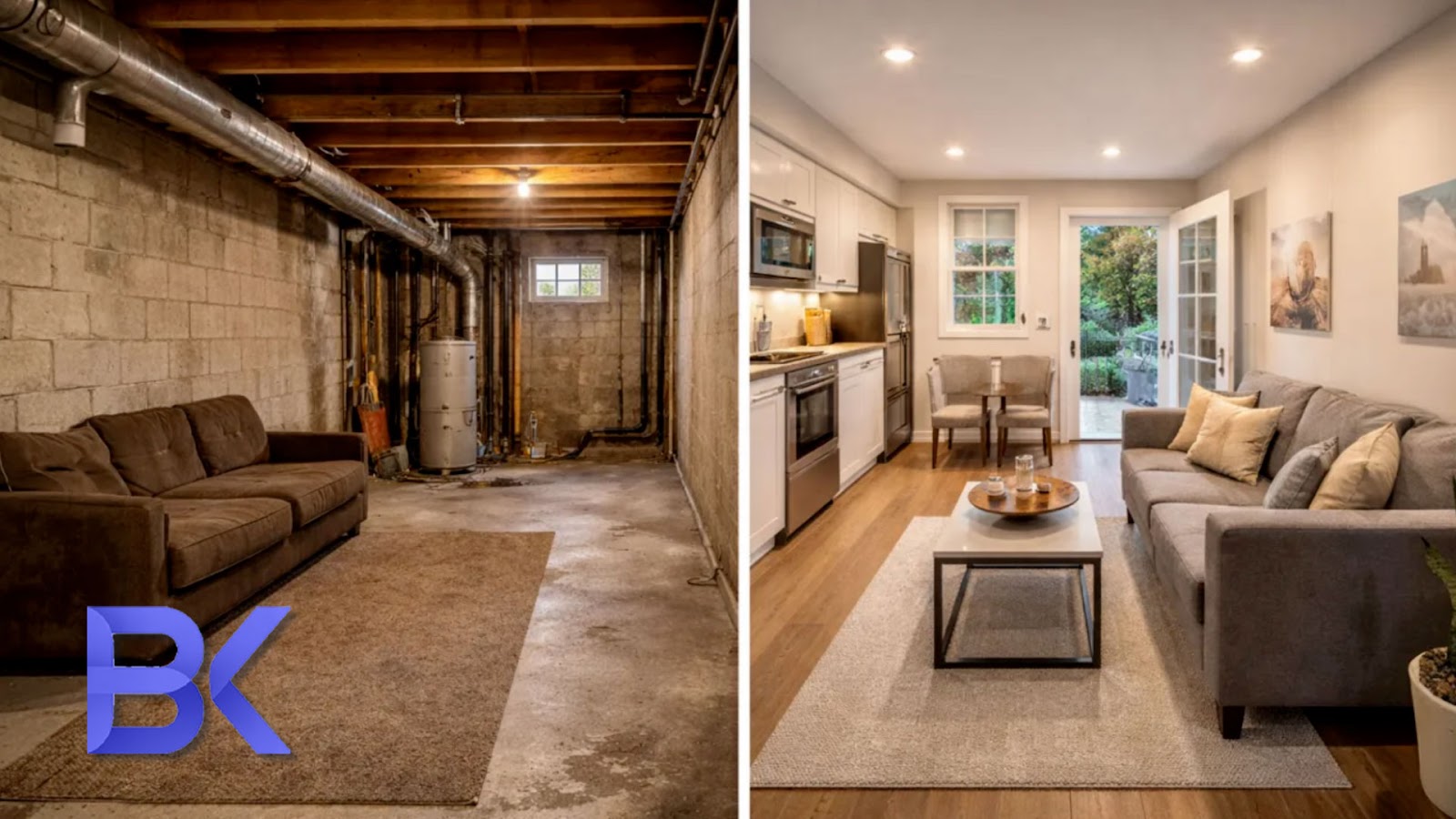
A 55-year-old Laval homeowner sought to renovate and create a basement rental unit to boost retirement income. Despite substantial equity, she was hesitant to “start over” with a larger mortgage.
BK Financial assisted her in setting up a HELOC specifically for renovation costs, with a defined project budget and a five-year repayment plan. The renovations increased home value and generated stable rental income, directly applied to accelerating HELOC repayment.
Since the renovation was carefully costed and borrowing matched by new income, the owner entered her 60s with increased property value, reduced debt, and additional monthly cash flow supporting her retirement.
FAQ
1. Is it better to refinance or get a HELOC in Quebec?
It depends on your goals. Refinancing suits large, one-time needs and disciplined debt consolidation. A HELOC offers flexibility for staged projects or short-term borrowing but demands strong self-control to avoid long-term revolving debt.
2. How much can I borrow against my home in Quebec?
Most lenders will let you borrow up to about 80% of your home’s appraised value in total (mortgage + HELOC), with the revolving HELOC portion capped at 65%. In practice, you still have to qualify under the stress test (income, debts, credit, contract rate + 2%), so you may not reach the full 80%. In planning, the key question is not the bank’s maximum, but what level of borrowing still lets you comfortably fund RRSP/TFSA/FHSA contributions, keep an emergency fund, and stay on track for retirement.
3. Can using a HELOC for investments be tax‑efficient in Quebec?
Potentially, yes. If funds are borrowed to generate investment income in non-registered accounts or rental properties, interest may be partially tax-deductible. This requires proper structure, documentation, and coordination with tax planning.
4. Does refinancing always save money on interest?
No. Refinancing can lower your rate or payment but may extend amortization and increase total interest over time, especially when adding other debts. Also, consider the notary fees in Quebec ($1,500+). A detailed comparison of penalties, new term, and payoff strategy is essential.
5. How do I avoid risking my retirement when using home equity in Quebec?
Limit borrowing to clear, value-adding purposes. Maintain a defined repayment plan, integrate RRSP/TFSA/FHSA contributions into your budget, and review the plan regularly with an experienced financial planner familiar with Quebec taxes and mortgages.
Ready to optimize your Quebec home equity strategy?
Free Consultation:
Phone: +1-514-834-5558
Email: contact@bkfinancialservices.ca
Book Free Consultation Today – Available in English, French, Russian, Hebrew.
Get a personalized analysis of your refinancing and HELOC options in Quebec. This includes cash-flow, tax, and retirement impacts, provided before you commit to a lender.
Disclaimer: This information is current as of 2026 and may change with updates to tax and mortgage laws.
This article is provided for informational purposes only and does not constitute legal, tax, or professional financial advice. Mortgage rules, interest rates, and Quebec provincial regulations are subject to change. Accessing home equity involves significant risks, including the potential loss of your property if payments are not maintained. Before making any financial decisions, consult with a qualified professional to evaluate your specific situation.