

The weeks following the RRSP deadline are a challenging financial period for many Quebec families. The RRSP deadline has just passed, tax slips are arriving, and childcare and RESP contributions are competing for whatever funds remain.
Without careful planning, post-RRSP cash flow issues can lead to rising credit card balances, stalled savings, and tax refunds that disappear into daily spending. However, a strategic approach can transform this period into a powerful financial reset.
Drawing on 20+ years of advising Quebec families, this guide explains how to organize your cash flow after the RRSP rush. Learn to balance taxes, childcare costs, and RESP contributions without derailing your monthly budget.
Managing RRSP Contributions in Your Quebec Family's Spring Cash Flow
The RRSP contribution deadline at the end of February is a major tax planning milestone. In 2026, rising living costs led many families to contribute at the last minute, often utilizing drained savings or short-term credit.
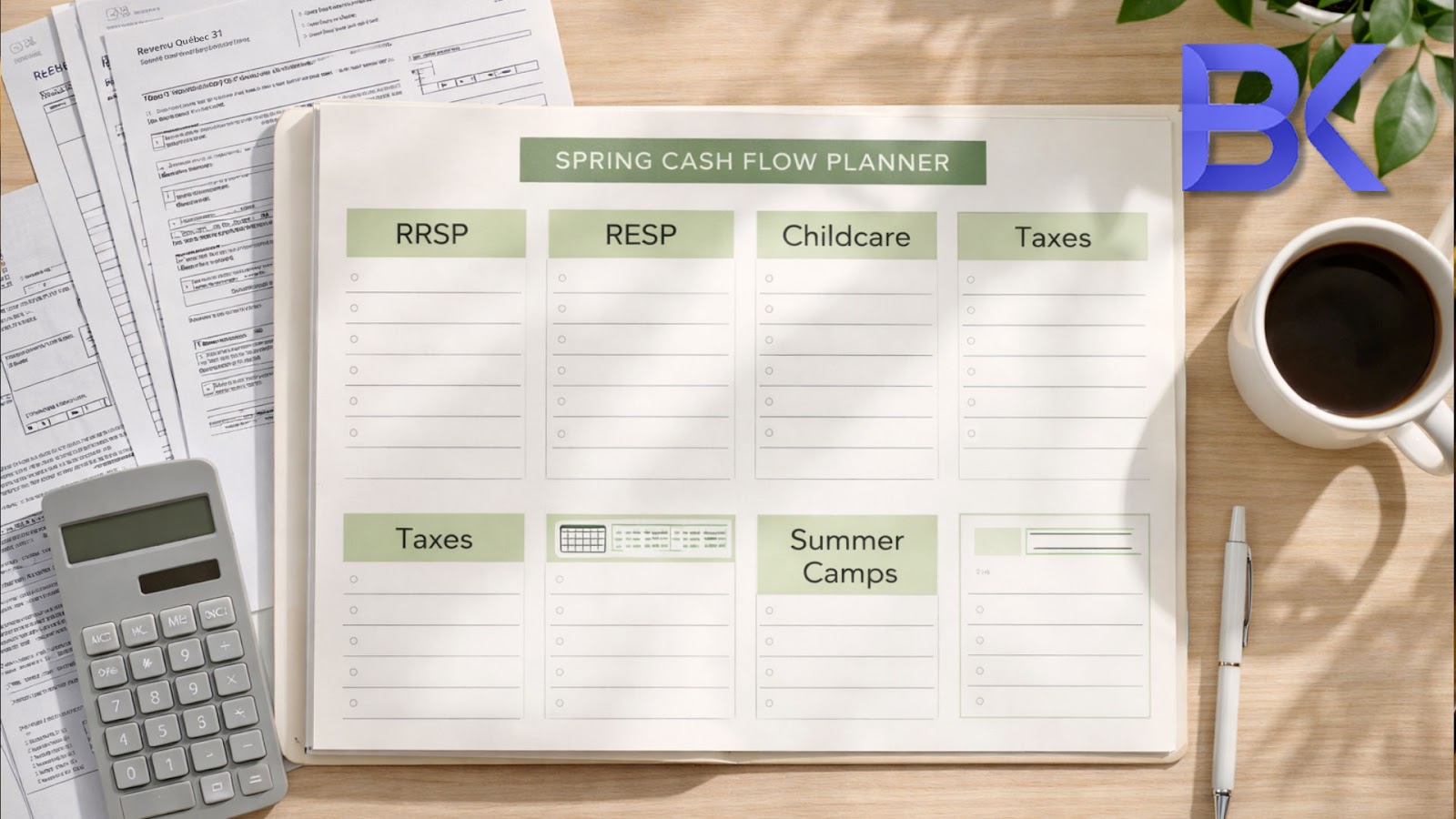
Stabilizing your cash flow after these contributions is the first step in the spring, in March and April in particular. Develop a simple one-month plan: list your net income, fixed expenses (e.g., rent, utilities, insurance), and any remaining RRSP loan payments. Include your expected tax refund based on your marginal tax rate. The primary goal is to avoid carrying RRSP-related debt into the summer.
If you used a credit card or an RRSP loan, prioritize paying it down with your tax refund rather than spending it. This single habit can add thousands to your net worth over several years without altering your lifestyle.
Coordinating Your RRSP Strategy and Tax Refund Timing
Many Quebec families overlook the vital connection between RRSP contributions and tax refunds. Your post-RRSP cash flow plan should strategically link these two components.
If your employer withholds tax at source, your February RRSP contributions will likely generate a refund in April or May. Estimate this refund using a calculator or professional analysis. Then, pre-assign it: allocate specific portions to debt, your emergency fund, and RESPs. To maximize this money, discover smart strategies to reinvest your RRSP tax refund.
This proactive approach prevents treating the refund as a surprise bonus. Instead, it becomes a planned tool to stabilize your March and April budget and boost long-term savings.
Balancing RRSPs with Other Key Family Financial Priorities
While RRSPs are powerful, they are not the sole financial priority for Quebec families. After the deadline, review the complete financial picture: childcare, upcoming summer camps, mortgage renewals, and RESP contributions.
Rather than asking “Did I max my RRSP?”, a more effective March question is: “Does my overall plan advance us toward our financial goals?” For young families in lower tax brackets, allocating next year's savings to a TFSA or RESP might actually be more beneficial than prioritizing RRSPs.
Spring Cash Flow Strategy Comparison for Quebec Families
| Strategy for Post-RRSP Dollars | Short-Term Effect on Cash-Flow | Long-Term Impact for Quebec Families |
| Pay down RRSP loan/credit card | Frees monthly minimum payments | Lower interest costs, stronger credit score |
| Increase RESP contribution | Slightly tighter monthly cash | More grants, reduced future tuition burden |
| Boost emergency fund | Cash parked, less available to spend | Protects against job loss, unexpected expenses |
| Prepay childcare or camps | One-time dip in spring cash | Smoother summer cash-flow, fewer last-minute charges |
Optimizing Quebec Taxes for Your Spring Net Income Plan
Quebec taxes are notoriously complex; March and April offer an ideal time to assess their impact on your annual net income. With your prior year's income, RRSP deductions, and childcare expenses known, you can project your exact tax outcome and monthly take-home pay.
Small adjustments can significantly improve cash flow for many families. These might involve revising source deductions at work, coordinating RRSP contributions between spouses, or strategically planning deductible expenses. For high-income Quebec families, family tax optimization strategies like spousal RRSP coordination and advanced deduction planning can unlock even greater cash flow improvements.
Maximizing Quebec Childcare Expense Deductions
Childcare represents a substantial expense for Quebec families. It is critical to understand that childcare expenses are treated differently federally and provincially. You claim a deduction on your federal return, which lowers your taxable income. However, on your provincial return, you claim the Quebec refundable tax credit for childcare expenses.
Expert Note: If your child attends a subsidized daycare (CPE or subsidized family daycare paying the set daily provincial contribution), you cannot claim the provincial tax credit for those specific fees, though you can still claim the federal deduction.
In March and April, gather all childcare receipts, including those for private daycare, after-school programs, and day camps. Childcare expenses are typically eligible for children under 14 (with exceptions for mental/physical impairment). The lower-income earner usually claims the federal deduction.

Adjusting Your Tax Withholdings After Filing
Once your 2026 tax return is filed, review whether you received a massive refund or had a balance owing. Consistently receiving a large refund means you are effectively providing the government with an interest-free loan.
Requesting Revenu Québec and the CRA to reduce your source withholdings (by submitting updated TP-1015.3 and TD1 forms based on expected RRSP or childcare deductions) instantly increases your monthly take-home pay, effectively solving your spring cash flow squeeze for next year.
Integrating Childcare Costs into Your Post-RRSP Spring Budget
Childcare costs persist long after the RRSP deadline. For Quebec parents, daycare, after-school care, and activities can consume 15–25% of net income. March and April are therefore crucial months to map these expenses for the upcoming year.
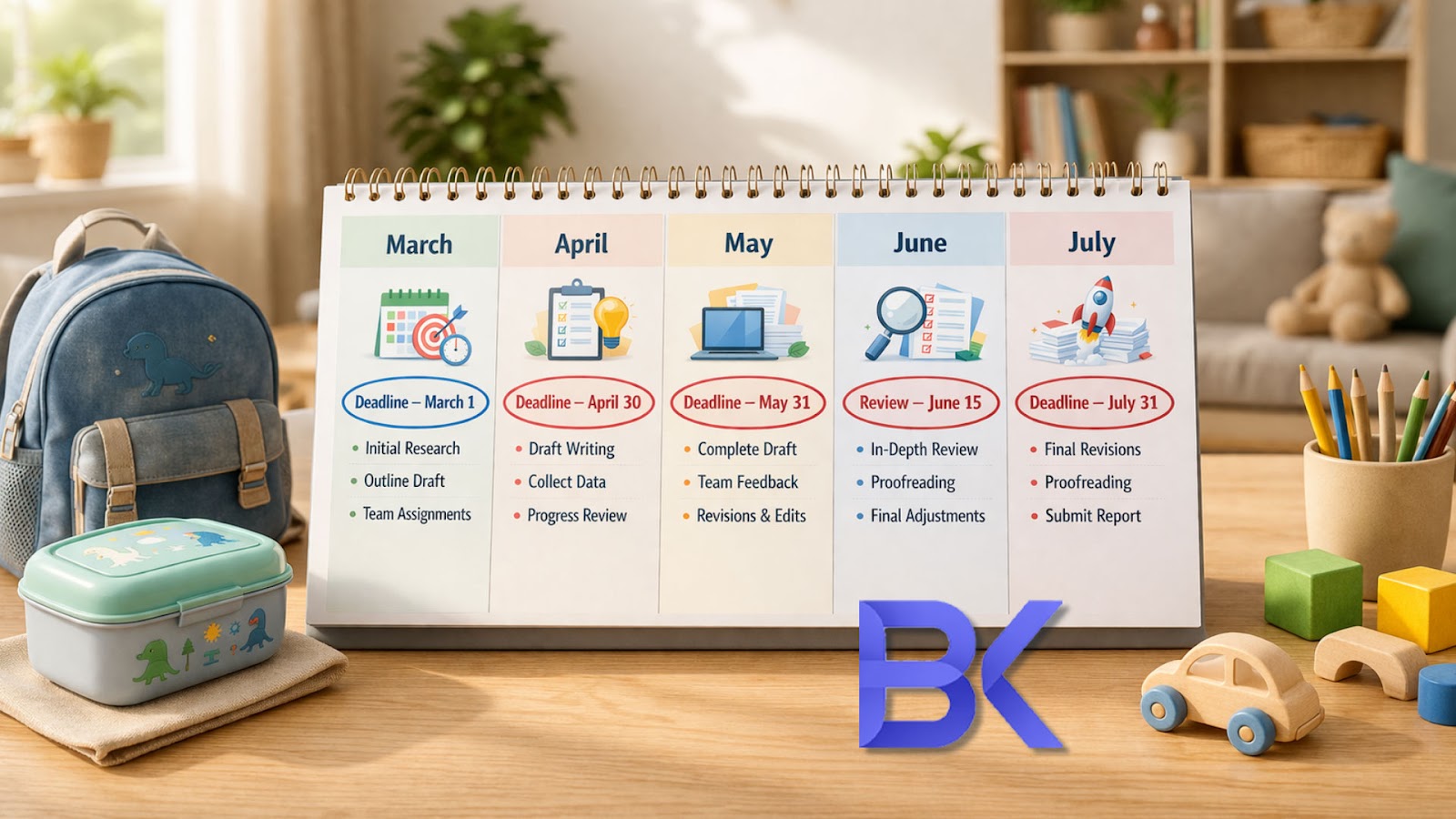
Itemize both fixed monthly childcare payments and irregular expenses like pedagogical days and summer camps. The objective is to avoid accumulating high-interest credit card debt when additional costs arise in June and July.
Proactive planning allows you to align your childcare schedule, vacation plans, and savings rhythm with your actual cash flow. This prevents reliance on wishful thinking.
Strategic Planning for Summer Camps Using Spring Refunds
Many families allocate tax refunds or work bonuses to book summer camps. This strategy is effective only when planned for in advance.
Decide in advance what portion of your refund will fund camps versus savings. For instance, you could allocate 40% to camps, 30% to debt, and 30% to RESP. Document this plan and share it as a couple. This step reduces last-minute stress and safeguards your RESP and debt-reduction goals from summer spending.
Evaluating Subsidized vs. Non-Subsidized Quebec Childcare Options
In Quebec, the choice between subsidized CPEs (Centres de la petite enfance) and non-subsidized private daycare carries massive cash flow implications. Non-subsidized settings have higher daily fees, but the provincial refundable tax credit can effectively level the playing field for middle-income earners.
Pro-Tip for Cash Flow: If you use a non-subsidized daycare, you do not have to wait until tax season to get your money back. You can apply for advance payments of the tax credit to receive the funds in monthly installments, drastically improving your day-to-day cash flow.
In March, consult your advisor to compare the annual net cost of each option. This analysis should include the impact on your monthly cash flow and year-end tax situation. For some families, a slightly higher monthly payment is acceptable for increased flexibility or location, provided the tax credit schedule is integrated into their budget.
Strategic RESP Contributions in Your Quebec Family's Spring Planning
Registered Education Savings Plan (RESP) contributions are often overlooked during the RRSP rush, yet they are vital for Quebec families. The Canada Education Savings Grant (CESG) provides a 20% match on the first $2,500 contributed per child annually, plus potential provincial grants (QESI).
In the spring, determine how RESP contributions align with your other priorities after the RRSP deadline. If you anticipate a tax refund, you might choose to make "catch-up" RESP contributions in April or May. Unused CESG room can be carried forward, but annual catch-up limits exist.
A coordinated financial plan enables you to benefit from both RRSP tax deductions and RESP grants over the long term.
Prioritizing RRSP vs. RESP When Cash Flow is Limited
When cash flow is limited, many parents question whether to prioritize RRSP or RESP contributions. The optimal choice depends on your tax bracket, employer pension situation, and your children’s ages.
A common, highly effective strategy for middle-income Quebec families is to first secure the $2,500 RESP contribution to capture the maximum 20% government grant. It is mathematically very difficult to beat a guaranteed 20% return. Once that is secured, direct additional savings to an RRSP or TFSA based on your tax rate.
Automating Small, Consistent Monthly RESP Contributions
Once your spring cash flow plan is established, consider setting up automatic monthly RESP contributions starting in April. Even modest amounts like $50–$100 per child per month can accumulate significant grants over time.
Automation shields RESP savings from daily spending decisions. You can always increase contributions later when childcare costs decrease or income rises. However, establishing this habit right after the RRSP season ensures education savings remain on track.
Real-World Examples: Boris Kolodner’s Experience with Quebec Families' March Cash Flow
Case 1 – Young family juggling RRSP loan, childcare and RESP
A Laval couple with two children under five consistently took a short-term RRSP loan each February. By March, their credit cards neared their limits, and RESP contributions had ceased.
We analyzed their Quebec taxes, childcare receipts, and RRSP impact. By adjusting their payroll withholdings and redirecting a portion of their expected refund, we developed an April recovery plan. This plan allocated 50% of their refund to clear the RRSP loan, 25% to high-interest cards, and 25% to restart their RESP at $75/month per child. Within 12 months, their non-mortgage debt decreased by 18%, and they secured the full CESG for both children without increasing their overall expenses.
Case 2 – Newcomer family optimizing net income and benefits
A newcomer family in Montreal, with one salaried and one self-employed member, struggled with unpredictable income and Quebec taxes. They made irregular RRSP contributions and were unclear about childcare credits and RESP grants.
We reviewed their last two years of tax returns, optimized childcare deductions, and established a realistic RRSP target aligned with their marginal tax rates. Their March cash flow was then structured to include a fixed monthly budget, automatic RESP contributions, and a dedicated portion of their spring refund for self-employed tax installments. Within two years, they achieved a stable emergency fund, consistent RESP funding, and significantly reduced March financial stress.
FAQ
1. How should Quebec families use their tax refund after the RRSP deadline?
Prioritize high‑interest debt from RRSP loans or credit cards, then allocate a portion to RESP contributions and emergency savings, based on a written spring cash-flow plan.
2. How do Quebec taxes and childcare deductions affect my budget?
Childcare expenses generate a federal deduction and a provincial refundable credit (for non-subsidized care), increasing your net income once refunds arrive. Applying for advance payments of this credit can fix your monthly cash flow immediately.
3. Is it better to contribute to RRSP or RESP when money is tight?
For many Quebec families, securing the $2,500 RESP amount needed to maximize the guaranteed 20% government grant should come first. After that, contributing extra to an RRSP or TFSA offers a balanced approach.
4. How can I avoid post-RRSP cash-flow stress?
Create a one‑month snapshot of income, fixed expenses, RRSP payments, childcare costs, and expected refunds. Then, assign every dollar of your upcoming refund in advance to debt, savings, and RESPs so the money isn't accidentally spent.
5. Can a financial planner in Quebec help coordinate RRSP, RESP and childcare costs?
Yes. An experienced planner can integrate Quebec taxes, childcare credits, RRSP strategy, RESP grants, and debt payments into a single cash-flow plan tailored to your family's reality.
Ready to optimize your Quebec family’s post-RRSP financial plan and coordinate RRSP, RESP, taxes, and childcare costs?
I create multi-year cash flow projections (2026–2035) tailored to Quebec families, showing exactly how RRSP refunds, childcare credits, RESP grants, and debt reduction work together to build your financial security.
Free Consultation: +1-514-834-5558 | contact@bkfinancialservices.ca | https://bkfinancialservices.ca
Book Free Consultation Today – Available in English, French, Russian, Hebrew
Disclaimer: This article is provided for general informational purposes only and does not constitute personalized financial, tax, or legal advice. Tax laws, including Quebec's specific rules for childcare credits, advance payments, and federal deductions, are subject to change. Always consult with a qualified financial planner or tax professional to evaluate your family's specific situation before making major financial decisions.