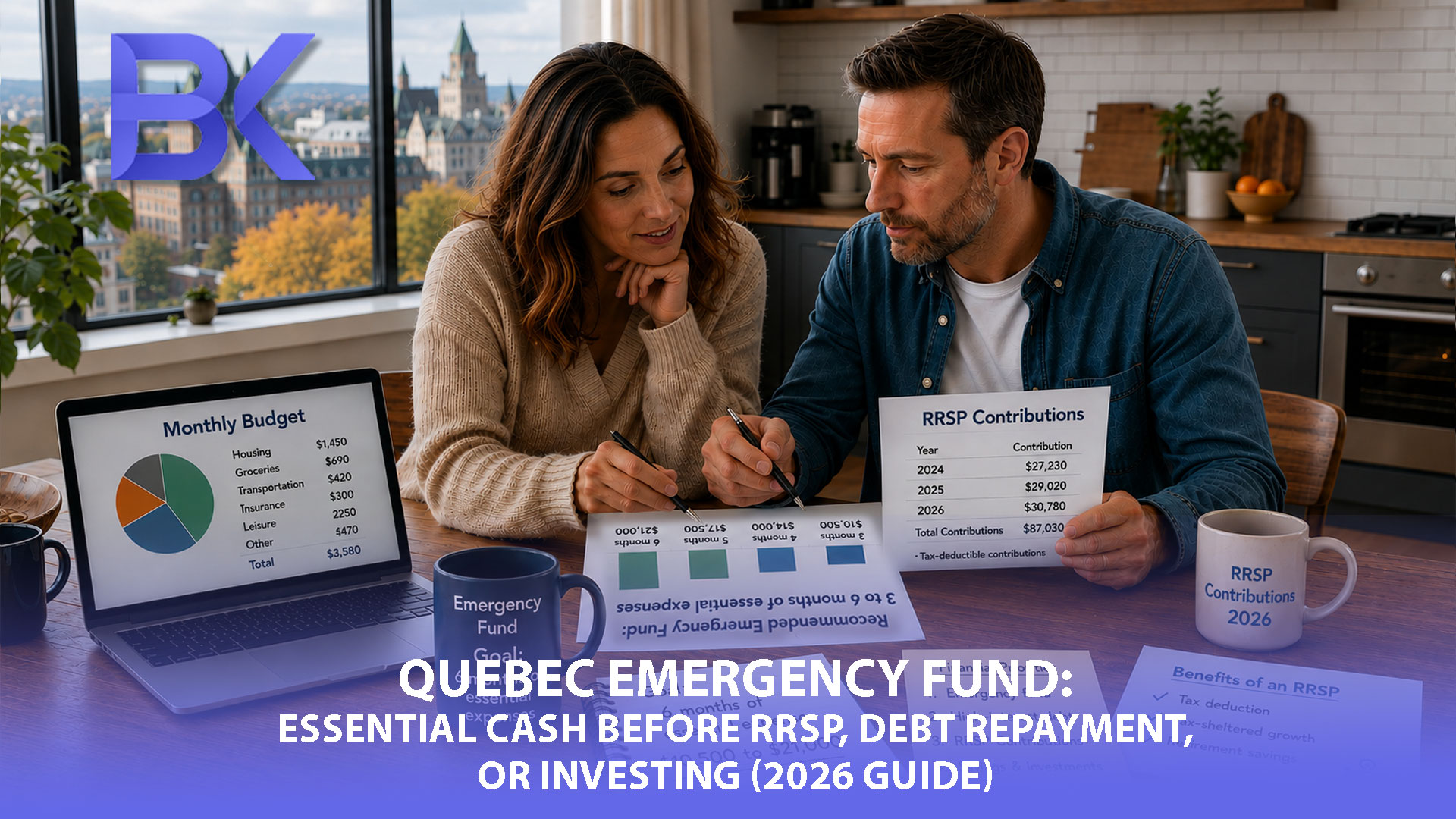
In Quebec, it is incredibly tempting to direct every spare dollar you have toward paying down your mortgage, wiping out credit cards, or maximizing your RRSP, FHSA, and TFSA. The urge to build wealth or eliminate debt quickly is strong.
However, skipping step one – building a reliable emergency fund – is one of the most costly mistakes for household finances. Without a cash cushion, a sudden job loss, a medical emergency, or an unexpected home repair will instantly force you back into high-interest debt.
A solid cash reserve protects your monthly budget, prevents rushed withdrawals from registered accounts, and supports better long-term financial decisions. Here is how much accessible cash Quebec households should consider keeping before accelerating debt repayment or investing more.
Why Quebecers Need a Strong Cash Cushion in 2026
Living costs, housing prices, and borrowing rates in Quebec remain stubbornly high in 2026. This economic reality severely elevates the importance of an emergency fund, especially for families managing rent, childcare, insurance, and summer spending pressures.
Calculating the Right Amount
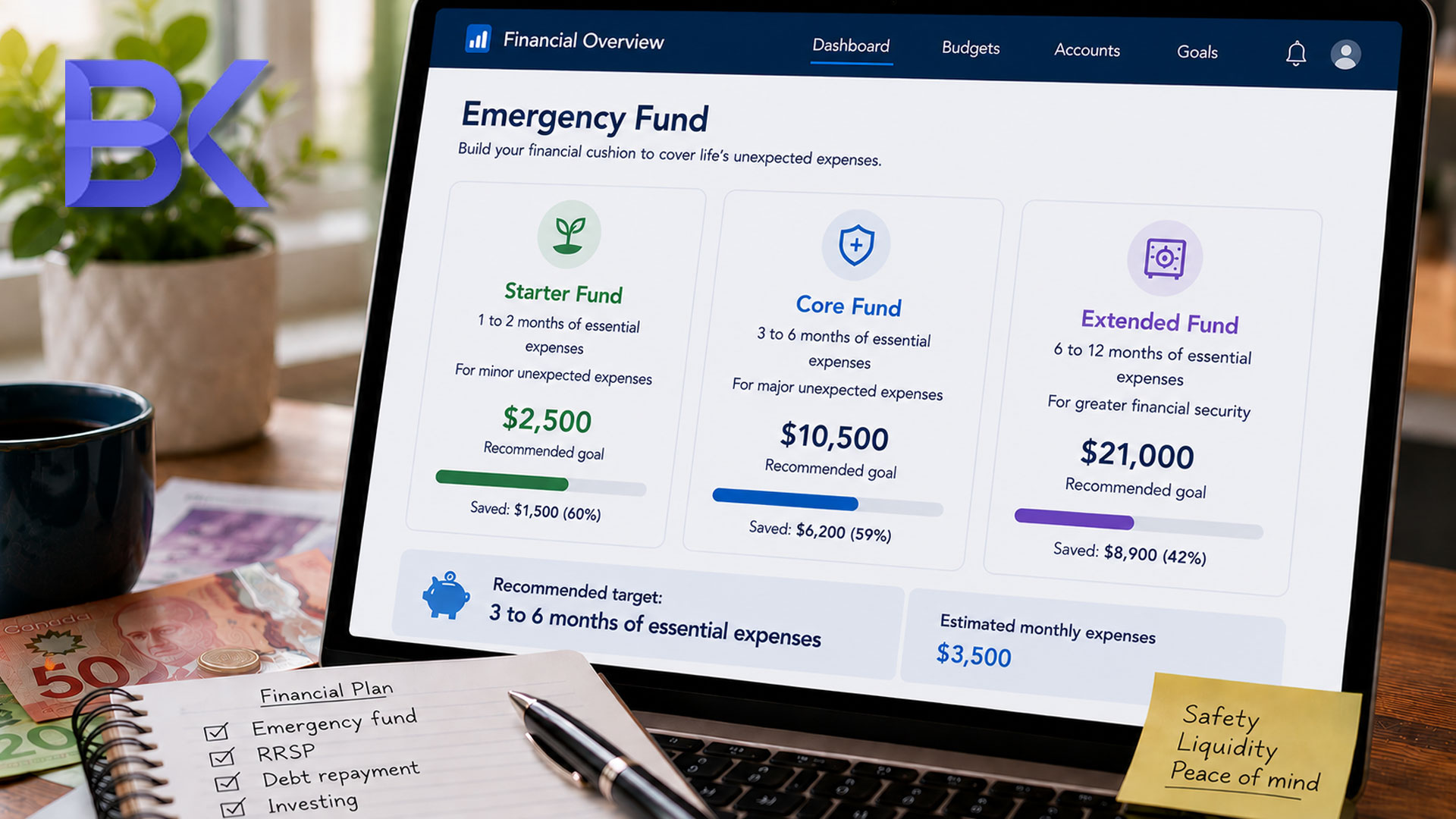
Base your calculation on the essential expenses you actually pay each month, rather than on your gross income. Review your bank statements from the last six months to establish a realistic average. Include housing, food, insurance, minimum debt payments, transportation, and essential family needs. Exclude restaurants, vacations, and non-essential subscriptions.
If your income is irregular, you are self-employed, or you have recently settled in Quebec, keeping 6 to 12 months of essential expenses may be more prudent. However, this is a guideline to adapt to your circumstances, not a universal requirement.
Determine your minimum monthly spending threshold. If your essential expenses total $3,500 per month, a three-to-six-month emergency fund would range from $10,500 to $21,000.
Keep Emergency Cash Accessible, Not Invested
An emergency fund should be kept in a liquid, low-risk product that can be accessed quickly, such as a high-interest savings account or a cashable GIC with suitable redemption terms. Its primary purpose is not to generate strong market returns, but to provide reliable access to cash when you need it.
If the money is invested in the stock market, a downturn could force you to sell at a loss precisely when you lose your job or face a major unexpected expense.
| Household Situation | Suggested Emergency Fund | Main Reason |
| Dual stable income, low debt | 3 months | Lower income interruption risk |
| One income or variable pay | 4-6 months | Higher cash-flow pressure |
| Self-employed or newcomer | 6-12 months | High income uncertainty |
| Homeowner with an older property | Add an appropriate property-repair buffer | Risk of significant and unexpected repair costs |
For an official budgeting tool and sample templates, see the FCAC budget planner and Canada.ca savings guidance.
RRSP Contributions vs. Emergency Fund
Quebec residents constantly debate whether to maximize RRSP contributions or build an emergency fund. The correct decision hinges on your current liquidity.
If you lack any cash reserve, establishing a “Starter Fund” of $2,000 to $5,000 must happen before you make significant RRSP contributions. This covers immediate, urgent needs (like a broken car or a dental emergency) without requiring a credit card.
Avoid Using an RRSP as Emergency Cash
An RRSP is generally not suitable as an emergency fund. Ordinary withdrawals are taxable, are normally subject to withholding tax, and generally do not restore the contribution room previously used. A withdrawal also reduces the amount that could have continued growing on a tax-deferred basis.
Except for specific programs such as the Home Buyers’ Plan or Lifelong Learning Plan, short-term emergencies should generally be covered with accessible savings rather than retirement assets.
When an RRSP Contribution May Make Sense Earlier
In some situations, an RRSP contribution may be appropriate before your emergency fund is fully established. Examples include contributing enough to receive an available employer match or making a carefully calculated contribution when a reasonably expected tax refund will be deposited directly into the emergency fund.
This strategy requires proper planning. A tax refund is not free money: it results from the deduction claimed and depends on your income, marginal tax rate, available contribution room, and overall tax situation.
Debt Repayment Priorities in Quebec
Although paying down expensive debt is important, it is rarely prudent to use every dollar of available cash for debt repayment. If all your extra money goes toward a credit card balance, the next unexpected expense may force you to use that same card again.
A balanced order of priorities may look like this:
- Starter Emergency Fund: Build an initial cash reserve of approximately $2,000 to $5,000.
- Employer Match: Contribute enough to an eligible workplace RRSP or pension plan to receive the full employer contribution available to you.
- High-Interest Debt: Prioritize credit cards and other expensive loans.
- Full Emergency Fund: Increase your reserve to cover approximately three to six months of essential expenses, or more when your circumstances justify it.
- Long-Term Investing: Continue contributing to your TFSA, FHSA, and RRSP based on your goals and available contribution room.

Net Income and Paycheck Reality
Your emergency fund must reflect your actual net income constraints. For Quebec employees, heavy deductions like provincial income tax, QPP, EI, and QPIP significantly reduce your disposable income. This explains why a seemingly high gross salary can still result in incredibly tight monthly cash flow.
Review your last 6 months of bank statements to find your true, consistent essential costs. Plan your emergency fund based on this hard data, not optimistic projections.
Mortgages and Emergency Cash Needs
Homeowners frequently question extra mortgage payments versus savings. In Quebec, homeownership dramatically increases your need for an emergency fund.
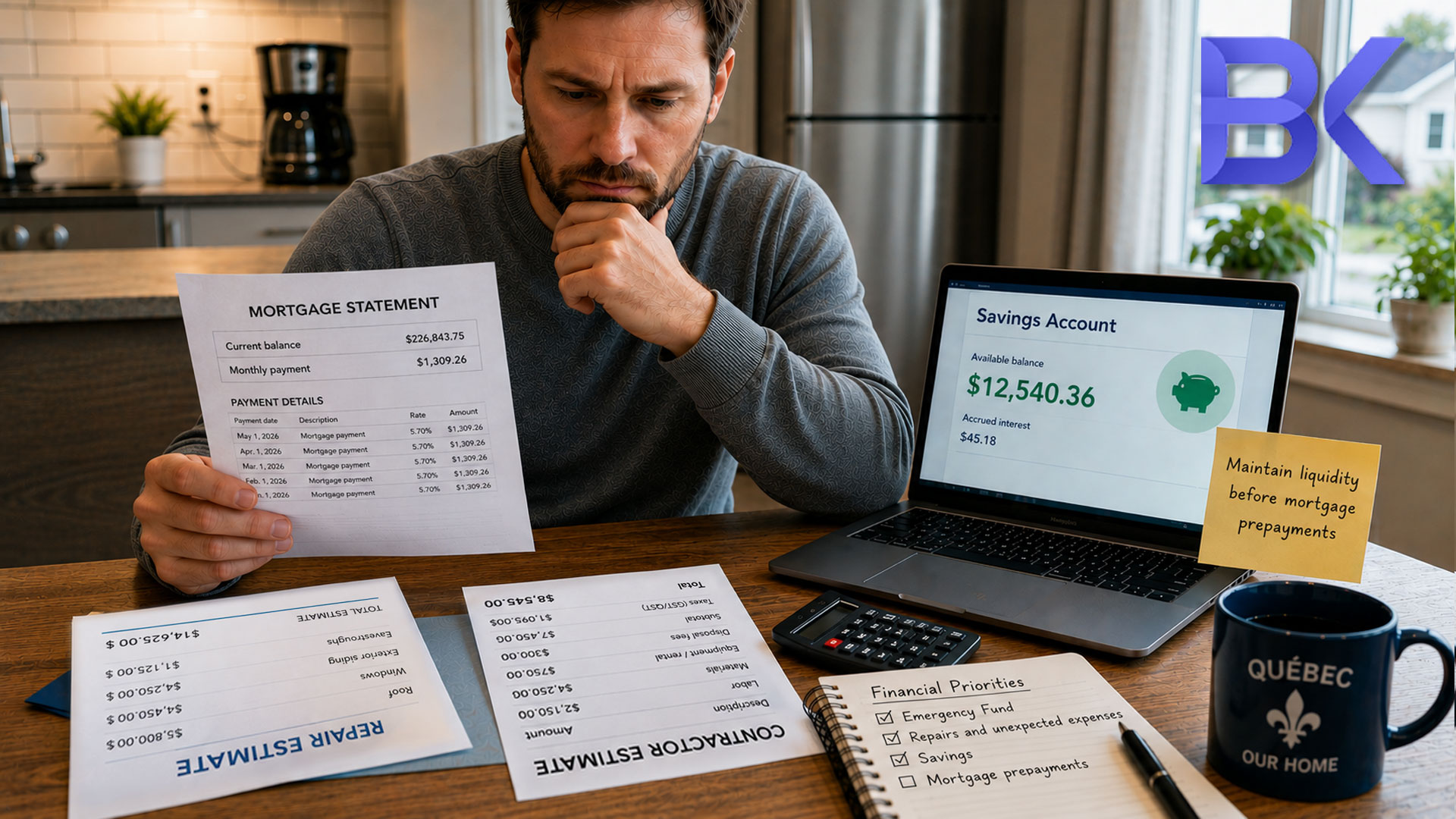
Once your emergency reserve is fully established and your high-interest consumer debt has been eliminated, making additional mortgage payments may be an effective way to reduce interest costs. Before doing so, review the prepayment privileges and limits in your mortgage agreement, since exceeding the permitted amount may result in a penalty.
Before Making Mortgage Prepayments, Ask Yourself:
- Does my emergency fund cover 3 to 6 months of essentials?
- Can I afford a $10,000 roof or foundation repair without relying on a line of credit?
- Would a brief, two-month job loss jeopardize my mortgage payments?
If you are unsure, get a quick professional estimate (roof, foundation, heating) – conservative contingency planning reduces the chance of surprise borrowing.
Once your 6-month reserve is fully funded and your high-interest consumer debt is gone, then prepaying a mortgage becomes a fantastic, risk-free investment.
2 Real Cases: Emergency Funds in Action
Case 1: Montreal Couple Focused on the FHSA
A Montreal couple prioritized maximizing their FHSAs and increasing their future home down payment, while keeping only $1,500 in accessible savings. Their essential monthly expenses were $4,200. When their car transmission failed, they had to put a $4,000 repair on a high-interest credit card.
The solution: We temporarily slowed their home-purchase contributions and built a core emergency reserve of $12,600. Three months later, they resumed their FHSA contributions, this time without relying on credit cards to cover the next unexpected expense.
Case 2: Self-Employed Quebec Consultant
A self-employed consultant focused exclusively on debt reduction and directed every client payment toward his line of credit. Because his income fluctuated, he repeatedly had to borrow again during slower summer periods, creating a stressful cycle of repayment and re-borrowing.
The solution: By temporarily making only the required payments on his debt, we built an emergency reserve covering eight months of essential expenses and placed his tax savings in a separate account. This structure stabilized his cash flow, helped break the recurring borrowing cycle, and allowed him to resume debt repayment on a more sustainable basis.
FAQ
How much emergency fund should I keep in Quebec before investing?
Aim for approximately three to six months of essential living expenses. A reserve covering six to twelve months may be more prudent for self-employed individuals, people with irregular income, newcomers, or homeowners facing less predictable expenses.
Should I build an emergency fund before making RRSP contributions?
n most cases, yes. A starter fund of approximately $2,000 to $5,000 provides a minimum liquidity buffer before you make substantial RRSP contributions. The tax benefit of an RRSP may not compensate for the cost of taking on new high-interest debt if an emergency occurs while you have no accessible savings.
An exception may apply when you are eligible for an employer contribution match or when an RRSP contribution and the resulting tax refund are part of a carefully calculated financial plan.
Is it better to pay off debt or keep cash?
Build a starter emergency fund first, then aggressively target high-interest debt (like credit cards). Once the high-interest debt is gone, finish building your full 3-to-6-month emergency reserve. This strategy prevents you from being forced to re-borrow.
Where should I keep my emergency fund?
Use a liquid, low-risk product such as a high-interest savings account (HISA) or a cashable GIC with redemption terms that provide sufficiently quick access to your money. Keep the emergency fund separate from the chequing account you use for everyday spending.
Does homeownership change the amount I need for an emergency fund?
Yes. Homeowners may face significant unexpected costs related to roofing, foundations, heating systems, appliances, or other repairs. The amount of the additional reserve should reflect the age, condition, and expected maintenance needs of the property rather than an arbitrary fixed amount.
Stop Living Paycheck to Paycheck with High Income
An emergency fund is not static; it evolves with life changes like homeownership, family growth, or employment shifts. Balancing cash security, debt reduction, and aggressive investing requires a tailored plan.
At BK Financial Services, Boris Kolodner, MBA, assists Quebec individuals, families, and businesses in creating highly practical financial plans that ensure every single dollar is allocated effectively.
Book Your Free Consultation Today for emergency fund check:
- Phone: +1-514-834-5558
- Email: contact@bkfinancialservices.ca
- Website: https://bkfinancialservices.ca
(Consultations available in English, French, Russian, and Hebrew. Secure your financial foundation today.)
Disclaimer: This article is provided for general informational and educational purposes only and should not be interpreted as individualized financial, investment, tax, legal, or accounting advice. Financial planning strategies should always be evaluated based on your personal financial situation, objectives, and risk tolerance. Consult a qualified financial professional before making major financial decisions regarding debt or investments.